


← All skills · Automation · Programmatic SEO Planner

Programmatic SEO Planner — finished output
Runs inClaude Code Codex Cursor Muse Dot Grok Bot Cue OpenClaw Hermes
Needs:The page plan as text: pseo.txt (a Seed line, a Pattern line with a [variable] placeholder, a Base line, a Goal line, one Field line per data field in 'name | source | example' form, one Page line per planned page in 'slug | variables' form, and Link and Index lines for the rules).

Similar Skills

View all skills →

What you get

  • A URL pattern — Base plus the playbook pattern, with an example URL built from the first planned page
  • A template-fields list — each field with its source and an example, so every page has data behind it
  • A planned-pages list — each page's slug and variable values, with duplicates and bad slugs dropped and named
  • Internal-link rules — hub and spoke, so no page ends up orphaned
  • An indexation plan — publish order and which pages stay out of the index, with a warning when a set over 50 pages has none
  • A completeness score — 100 minus the named deductions, with every gap, error, and warning listed

Good fit

  • Planning SEO pages at scale from a template and data you already have
  • Checking whether a page set will look thin before building it — too few fields, no unique value per page
  • Keeping a programmatic set honest — planned from the brief you wrote, with no invented demand

Not for

  • Promising a ranking — the score is a checklist count, and a 100/100 plan for a pattern nobody searches for still ranks for nothing
  • Generating the pages — it plans them; building and publishing stay with your site
  • Checking search volume — demand is never invented; bring your own keyword research and write it into the brief

Sample output

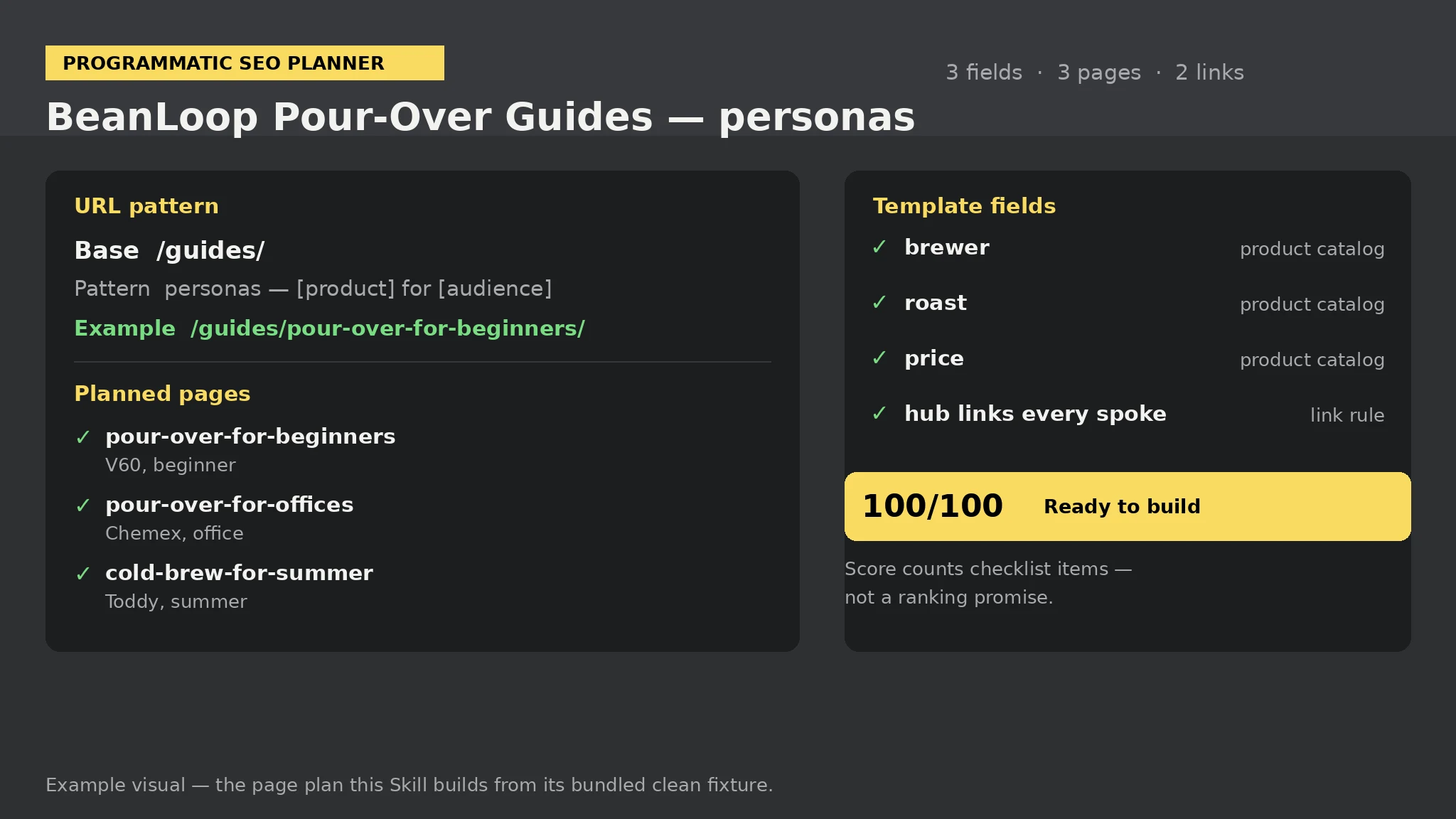
An example of what this Skill produces. Sample content, shown for illustration.

Programmatic SEO Plan — sample

Seed: pour-over coffee gear | Pattern: personas - [product] for [audience] | Fields: 3 | Pages: 3 | Links: 2 | Completeness: 100/100 | Gaps: 0 | Errors: 0 | Warnings: 0

Ready to build — the plan is complete enough to build from.

URL pattern: Base /guides/, Pattern personas - [product] for [audience], Example URL /guides/pour-over-for-beginners/. Template fields brewer, roast, price — all from the product catalog. Planned pages pour-over-for-beginners, pour-over-for-offices, cold-brew-for-summer.

A completeness score is a checklist count, not a ranking promise.

About this Skill

You say
BeanLoop sells pour-over gear — plan a personas-pattern page set for it and tell us whether it is ready to build.

How to install

  1. Copy the install prompt into your agent: Read https://skillu.dev/install/agent.md, then install the Programmatic SEO Planner skill (programmatic-seo-planner).
  2. Or download the Skill package from this page after launch and place its folder in your agent’s skills directory.
  3. Call it with a slash command, e.g. /programmatic-seo-planner, and describe what you want in plain words.

FAQ

Does a 100/100 score mean the pages will rank?

No. It means every checklist item passed: seed, pattern, base, goal, at least 2 fields, at least 1 page, link rules, and a clean brief. That is completeness, not demand — whether a page ranks depends on real search demand, which this planner never invents.

Which playbooks can it plan?

Twelve: templates, curation, conversions, comparisons, examples, locations, personas, integrations, glossary, translations, directory, and profiles. One run plans one pattern; the pattern text must contain a [variable] placeholder, or the plan cannot generate distinct pages.

What happens to a page I leave out?

It simply is not planned: the plan lists only the Page lines you wrote, and the report deducts 10 points when there are none at all. Add the line and re-run — the score only moves when the brief itself changes.

Get Premium access Browse more skills